What Your Southeast Wisconsin Lawn Needs Before Winter
Summer can be tough on a lawn. Between heat, foot traffic, dry conditions, weeds, and long mowing seasons, your grass may be looking a little tired by the time September arrives.
The good news? Fall is one of the best times of year to improve the health of your lawn in Southeast Wisconsin.
Cooler temperatures and more consistent moisture create favorable conditions for cool-season grasses to recover and develop stronger roots. UW-Madison Extension identifies early fall as an important period for fertilizing, aerating, overseeding, weed management, and other lawn care practices.
If you live in Waukesha, Brookfield, Pewaukee, Delafield, Hartland, Sussex, or the surrounding Southeast Wisconsin area, here is what should be on your fall lawn care checklist:
1. Keep Mowing Your Lawn
One of the biggest fall lawn care mistakes is assuming you can stop mowing as soon as temperatures cool down.
Your grass may continue growing well into fall. Continue mowing as needed until the lawn goes dormant. UW-Madison Extension recommends avoiding excessively tall grass going into winter because longer turf can create conditions that contribute to snow mold and vole damage.
You also don’t want to scalp your lawn. Continue following the one-third rule, removing no more than approximately one-third of the grass height at a time.
2. Fertilize at the Right Time
Early fall is an important fertilization window for Wisconsin lawns.
In fact, UW-Madison Extension identifies Labor Day as an optimum time for fertilizing lawns in Wisconsin. Fall fertilization supports grass growth and helps maintain a thick, healthy stand of turf going into the colder months.
A thicker lawn isn’t just about appearance. Healthy, dense grass can also compete more effectively with weeds.
However, more fertilizer isn’t necessarily better. Applying fertilizer too late in the fall can encourage excessive growth at a time when the lawn should be preparing for winter.
3. Consider Aeration
Does your lawn feel hard and compacted? Do areas of the yard drain poorly? Has your grass become thin despite regular maintenance?
Core aeration may help.
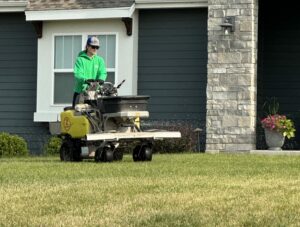
Aeration removes small plugs of soil from the lawn, creating pathways for air, water, and nutrients to reach the root zone. It can be particularly helpful for compacted soils and lawns with drainage issues. UW-Madison Extension considers fall an excellent time for core aeration when soil moisture is adequate.
This can be especially useful for lawns that receive significant foot traffic throughout the summer.
4. Overseed Thin or Bare Areas
If your lawn has thin patches or bare spots after summer, fall is often your best opportunity to repair them.
Overseeding adds new grass seed to an existing lawn. In Southeast Wisconsin, early fall provides favorable conditions because temperatures are generally more suitable for cool-season grass establishment and summer annual weeds such as crabgrass are winding down.
For lawns that need both aeration and overseeding, the typical order is:
Aerate → prepare the soil → overseed → keep the seed consistently moist.
UW-Madison Extension recommends completing overseeding early enough to give new grass time to establish before hard freezes.
5. Deal With Fall Weeds
Fall is also a useful time to address perennial broadleaf weeds such as dandelions and clover while they are actively growing.
But the best long-term weed strategy isn’t simply applying weed control. A thick, healthy lawn is one of your best defenses against future weed problems.
6. Don’t Let Leaves Sit All Winter
A few leaves scattered across your lawn aren’t necessarily a problem, but thick layers of leaves should not be allowed to remain on the grass throughout winter.
Leaves and debris can block light and air from reaching the turf and contribute to disease problems when left in place under snow. Before winter arrives, make sure your lawn is reasonably clear of heavy leaf buildup.
What Should You Do First?
If your Southeast Wisconsin lawn is looking worn out after summer, don’t try to do everything at once.
Start by evaluating the condition of your grass. Look for thin areas, compacted soil, weeds, drainage problems, and areas that suffered from summer stress.
From there, your fall lawn care plan might include mowing, fertilization, aeration, overseeding, weed control, and leaf cleanup.
The key is timing. Fall is a short but valuable window to strengthen your lawn before winter.
If your lawn needs more than routine mowing, professional lawn service can help determine what it actually needs rather than simply treating every lawn the same way.
Have Questions?
Early September is an important time to begin fall lawn care. Fertilizing, aerating, and overseeding should be timed around weather and lawn conditions.
Yes. UW-Madison Extension identifies early fall, around Labor Day, as an optimum fertilization period for Wisconsin lawns.
If you’re doing both, aerate first. Aeration creates openings that can improve seed-to-soil contact. UW-Madison recommends aerating before overseeding when soil conditions make aeration beneficial. scheduling, and customized solutions for every property.
Not necessarily. Continue mowing while the grass is actively growing. The lawn should not be allowed to become excessively tall before winter.
There isn’t one task that works for every lawn. A good fall plan depends on your lawn’s condition, but mowing, proper fertilization, addressing compaction, repairing thin areas, and removing excessive leaves are all important.